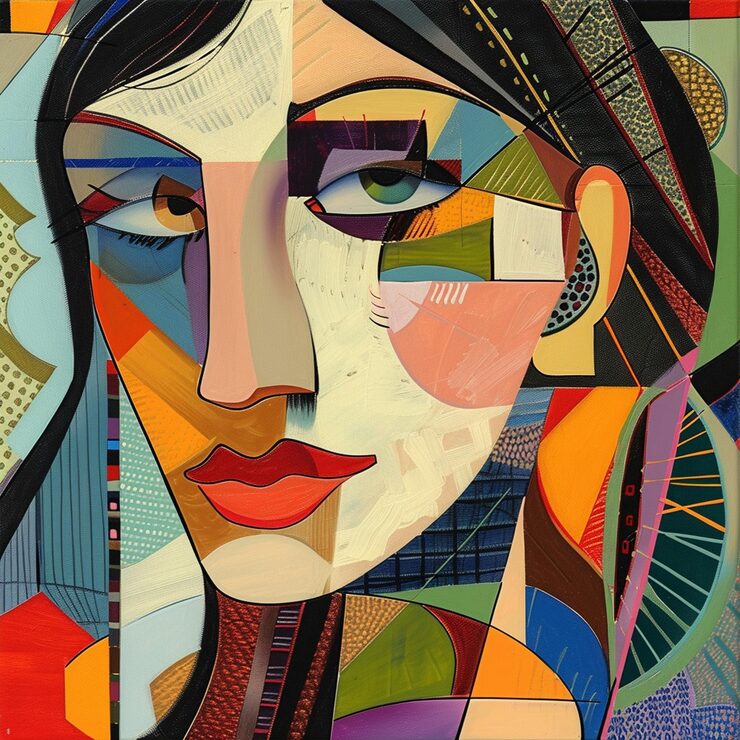
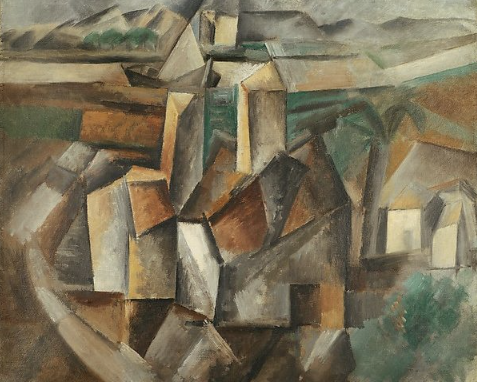
Main Focus: Simultaneous Multiple Perspectives Aesthetic: Geometric Fragmentation and Interlocking Planes Key Phase: Analytical (Monochromatic palette, intense fragmentation) Key Phase: Synthetic (Use of Collage/Papiers Collés)
Overview: What is Cubism?
Cubism, pioneered by Pablo Picasso and Georges Braque around 1907, is perhaps the most radical and influential art movement of the 20th century. It completely broke with the tradition of perspective that had dominated Western art since the Renaissance. Instead of depicting subjects from a single, fixed viewpoint, Cubism presents them from multiple viewpoints simultaneously.
The core principle is fragmentation. Objects are broken down, analyzed, and reassembled in an abstracted form, often featuring geometric shapes—the “cubes”—and interlocking planes. This intellectual approach forces the viewer to move beyond visual realism and engage with the underlying structure and essence of the object. The movement is generally divided into two phases: Analytical Cubism (intense fragmentation, sober colors) and Synthetic Cubism (use of collage and brighter colors).
Curatorial Note: Analyzing Form and Structure
This curated collection serves as a visual guide through the revolutionary phases of Cubism, from its austere beginnings to its playful synthetic period. We showcase works that exemplify the intellectual dismantling of form, highlighting the techniques of superimposition and interpenetration that redefined modern painting.
Our focus is on the geometric rigor and structural innovation inherent in the Cubist method. Here, you will find key pieces that demonstrate the transition from realistic representation to total abstraction. This collection is an essential gateway to understanding how the foundations of contemporary art were laid through radical structural re-invention.