Overview: What is Op Art?
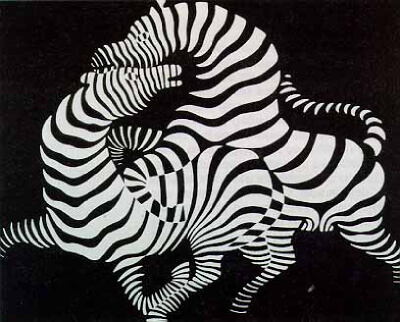
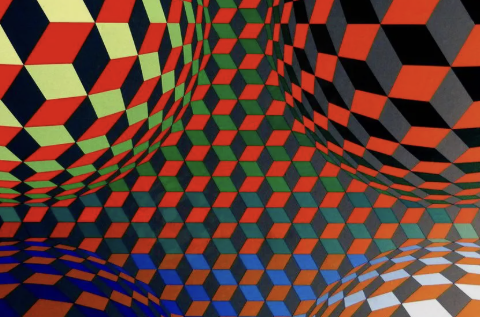
Op Art, short for Optical Art, is a movement that emerged in the 1960s, using precise, often geometric, arrangements of line, shape, and color to create optical illusions. Unlike kinetic art (which physically moves), Op Art is purely static, but it exploits the viewer’s eye to create the sensation of movement, vibration, and hidden images on the two-dimensional surface.
The style is defined by mathematical precision and the absence of emotion or external narrative. Op Artists, such as Victor Vasarely and Bridget Riley, systematically explored the principles of optics, utilizing color theory (especially the juxtaposition of complementary or contrasting colors) and meticulous geometric patterns. The artwork is not about what is painted, but how the viewer’s brain interprets the visual data, making the experience inherently participatory and perceptual.
Curatorial Note: Precision and Visual Science
This curated collection features key works that demonstrate the mesmerizing power and scientific rigor of Op Art. We focus on pieces that showcase the movement’s hallmark dedication to geometric perfection, often rendered in monochromatic or highly contrasting palettes to maximize the illusion of depth, warp, or shimmer.
Our collection is a study in visual phenomena. We present masters who transformed mathematical concepts into compelling visual experiences, engaging the retina and the mind simultaneously. Acquiring an Op Art piece means owning a work that is constantly in motion, changing based on the light, the viewer’s distance, and their individual perceptual response.