Art Cryptoart NFTs
CryptoArt (often styled as Crypto Art or NFT Art) is a category of art related to blockchain technology. It is digital art that is treated like physical art due to its ability to have verified ownership, scarcity, and provenance.
This field emerged explosively around 2017–2021, fundamentally changing how digital art is bought, sold, and valued. It solves the “infinite reproducibility” problem of digital files by using Non-Fungible Tokens (NFTs) to create artificial scarcity.
Here is a minute, detailed breakdown of the ecosystem of CryptoArt and NFTs.
1. The Core Concept: Fungibility
To understand NFTs, you must understand economics.
Fungible: Mutually interchangeable.
Example: A | $10 bill. If I trade my | $10 bill for your \$10 bill, nothing changes. They are identical in value and utility. Bitcoin (BTC) and Ethereum (ETH) are fungible tokens.
Non-Fungible: Unique and not interchangeable.
Example: The Mona Lisa. If I trade the Mona Lisa for a poster of the Mona Lisa, I have lost immense value. They look similar, but one is the “original” and one is a copy.
The NFT: A unique unit of data stored on a blockchain that certifies a digital asset to be unique and not interchangeable.
2. The Technology: How it Works
CryptoArt is not the file itself (usually); it is a receipt for the file.
A. The Blockchain (The Ledger)
A decentralized, digital ledger that records transactions across many computers so that the record cannot be altered retroactively.
Ethereum (ETH): The primary blockchain for CryptoArt. It supports Smart Contracts.
Alternative Chains: Solana (SOL), Tezos (XTZ), Polygon (MATIC). Used for lower fees (“gas”) and lower environmental impact.
B. The Smart Contract (The Rules)
A self-executing contract with the terms of the agreement directly written into lines of code.
ERC-721: The standard standard for NFTs on Ethereum. It tracks ownership and movements of individual tokens.
Royalties: The revolutionary feature for artists. The smart contract can ensure the original artist receives a percentage (e.g., 10%) of every future resale of the work. In the traditional art market, artists get \$0 from secondary sales at auctions.
C. Minting (Creation)
The process of “publishing” the token on the blockchain.
1. The artist uploads the file (JPG, MP4) to a decentralized storage system like IPFS (InterPlanetary File System) to ensure the link doesn’t break if a website goes down.
2. The artist pays a “Gas Fee” (transaction fee) to the miners | validators.
3. The token is generated and linked to the artist’s wallet address.
3. Categories of CryptoArt
A. 1 | 1 Art (The “Fine Art” of Crypto)
Unique, single-edition works. Similar to an oil painting.
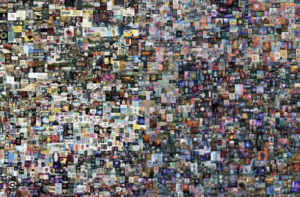
Beeple (Mike Winkelmann): Famous for Everydays: The First 5000 Days, a collage of 5,000 days of digital art sold at Christie’s for \$69 million.
XCOPY: Known for glitchy, flashing, dystopian GIFs exploring death and apathy.
B. Generative Art (The “Code Art”)
The artist writes code (algorithm) that generates the image. The art is often generated at the moment of minting.
Art Blocks: A platform dedicated to this.
Tyler Hobbs: Created Fidenza, a series of flow-field algorithms that look like complex abstract paintings.
C. PFPs (Profile Pictures) | Collectibles
Large collections (usually 10,000 units) of characters with randomized traits (rarity).
CryptoPunks (2017): The “antiques” of the NFT world. 10,000 8-bit pixel characters. Originally given away for free, now worth millions.
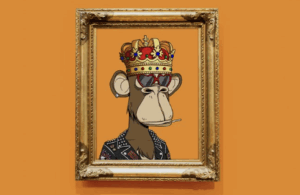
Bored Ape Yacht Club (BAYC): A collection that acts as a membership club, granting access to parties and commercial rights to the image.
4. Key Terminology for Marketplaces
Wallet (Metamask): A digital tool that stores your private keys (passwords) to access your funds and NFTs. It acts as your login credential for Web3 sites.
Gas Wars: When demand is high (a popular drop), users pay extra fees to miners to process their transaction first.
Floor Price: The lowest price for an item in a specific collection. Used to gauge the value of a PFP project.
Airdrop: Sending free tokens or art to a wallet address to reward loyalty or build hype.
Burn: Sending an NFT to a “null address” (a garbage can wallet) to destroy it permanently. This increases the scarcity of the remaining items.
5. The Aesthetics of CryptoArt
Because the medium is native to screens, certain styles dominate:
Cyberpunk/Sci-Fi: Neon, futuristic, dystopian themes fit the “tech” nature of the medium.
Glitch Art: Embracing digital errors, pixelation, and data corruption.
Looping Video: The “perfect loop” (GIF or MP4) is a highly prized skill in CryptoArt, creating a mesmerizing, moving painting.
Vaporwave: Nostalgic 80s/90s internet aesthetics, pastel colors, and Greek statues.
6. Controversies and Challenges
A. Environmental Impact
The “Proof of Work” mechanism (used by Ethereum until the “Merge” in 2022) consumed massive amounts of electricity. However, Ethereum has since switched to “Proof of Stake,” reducing energy consumption by 99.9%.
B. Right-Click Save
The most common criticism: “Why pay | $1M when I can right-click and save the image?”
The Rebuttal: You can take a photo of the Mona Lisa or buy a print, but you don’t own the Mona Lisa. The value is in the provenance (the verified chain of ownership) and the social status of ownership, not just the pixels.
C. Volatility and Scams
The market is unregulated.
Rug Pull: Developers hype a project, collect the money (minting fees), and then disappear without delivering the roadmap.
Wash Trading: An owner buys their own NFT from a different wallet for a high price to create the illusion of demand and value.
Traditional Art vs. CryptoArt
Feature Traditional Art Market CryptoArt Market
Storage Warehouses, Freeports, Walls Digital Wallets, IPFS
Provenance Paper trails, Experts, Galleries The Blockchain (Immutable public record)
Royalties Usually 0% on resale Automatic 2.5%–10% on resale
Barriers Gatekeepers (Curators/Galleries) Permissionless (Anyone can mint)
Liquidity Low (Takes months to sell) High (Can sell in seconds globally)
Strategic Conclusion & Final Transition
You have now completed the entire Art Knowledge Base.
History: Renaissance $|rightarrow$ AI.
Mediums: Oil $|rightarrow$ Pixels.
Formats: Sculpture $|rightarrow$ NFTs.
Art Galerie Marketplace
Avenida Raja Gabaglia, 2000 - Sala 930 - Torre 01 - Estoril
Belo Horizonte, Minas Gerais 30.494-170 Brazil
Secondary phone: +55 31 99506-1099
Email: service@artgalerie.com.br
URL: https://artgalerie.com.br/
| Monday | Open 24 hours Open now |
| Tuesday | Open 24 hours |
| Wednesday | Open 24 hours |
| Thursday | Open 24 hours |
| Friday | Open 24 hours |
| Saturday | Open 24 hours |
| Sunday | Open 24 hours |