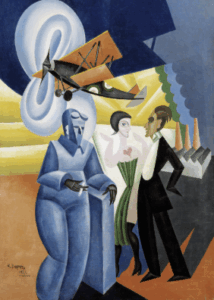
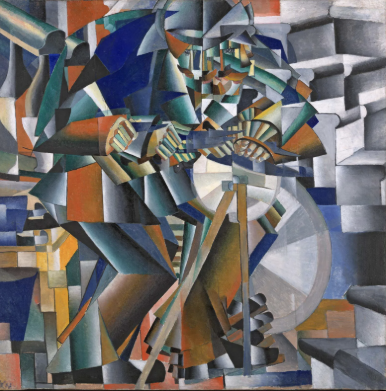
Art Futurism was an Italian avant-garde art and social movement that originated in 1909. It is unique in art history because it didn’t start with paintings; it started with a Manifesto.
It was an aggressive, controversial, and highly political movement that worshipped speed, technology, youth, and violence. The Futurists hated the past (especially the Renaissance art that Italy was famous for) and wanted to destroy museums and libraries to make way for the modern machine age.
Here is a detailed breakdown of the movement.
1. The Origin: The Blast from the Front Page
Futurism was founded by the Italian poet Filippo Tommaso Marinetti.
The Event: On February 20, 1909, Marinetti published the Futurist Manifesto on the front page of the French newspaper Le Figaro.
The Statement: It was a shocking declaration of war against tradition. Marinetti famously declared that “A racing car… is more beautiful than the Victory of Samothrace” (a famous ancient Greek statue).
The Goal: To drag Italy, which they felt was stuck in the past, kicking and screaming into the modern industrial world.
2. Core Philosophy: “War is the World’s Only Hygiene”
The Futurists were obsessed with the energy of the new century. Their philosophy rested on three pillars:
1. Speed and Dynamism: They believed that “all things move, all things run, all things are rapidly changing.” They wanted to capture the sensation of speed on a static canvas.
2. Technology: They glorified the industrial city, electric streetlamps, airplanes, trains, and factories.
3. Violence and Patriotism: They believed that agitation and destruction were necessary to cleanse the world of “stagnant” history. This intense nationalism eventually led many Futurists to support Fascism and Benito Mussolini later in life.
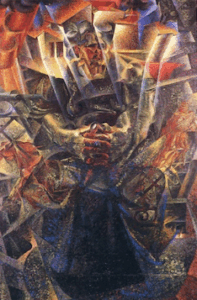
3. Visual Characteristics
How do you recognize a Futurist artwork? It looks like a Cubist painting that exploded.
Lines of Force: Sharp, diagonal lines that cut through objects to represent the direction of movement and energy.
Blurring/Repetition: To show motion, they would paint an object in multiple stages of movement simultaneously (like a stop-motion photograph).
Example: If a horse is running, they wouldn’t paint four legs; they would paint twenty legs in a blur.
Bright Colors: Unlike the dull browns of Cubism, Futurists used electric, prismatic colors to represent the energy of modern lighting and city life.
Intersection of Planes: Objects and backgrounds crash into each other, representing the noise and chaos of the city.
4. Key Artists & Notable Works
Artist Role Notable Work Description
Umberto Boccioni The Genius Unique Forms of Continuity in Space A bronze sculpture of a figure striding forward. It doesn’t look like a human, but like the wind shaped by the human moving through it.
Giacomo Balla The Teacher Dynamism of a Dog on a Leash A humorous painting of a dachshund walking a lady. You see a blur of wagging tails and shuffling feet.
Gino Severini The Dancer Blue Dancer He applied Futurist speed to the human form in dance, breaking the figure into shards of blue light.
Carlo Carrà The Anarchist Funeral of the Anarchist Galli A chaotic scene of a riot, using jagged lines to make the viewer feel the violence and confusion.
Luigi Russolo The Musician The Art of Noises He argued that orchestras were obsolete and built “Noise Machines” (Intonarumori) to mimic the sounds of factories and engines.
5. Futurist Architecture
Antonio Sant’Elia was the visionary architect of the group.
He drew the Città Nuova (New City)—massive skyscrapers with external elevators, connected by multi-level highways and bridges.
Impact: Although he died in WWI before building anything, his drawings inspired the look of almost every sci-fi city since, including the movie Blade Runner.
6. The Difference: Cubism vs. Futurism
Futurism borrowed heavily from Cubism, but they had very different goals.
Feature Cubism (France) Futurism (Italy)
Subject Still lifes, portraits (Static) Cars, crowds, riots (Moving)
Goal To analyze form and structure To capture speed and emotion
Vibe Intellectual, quiet, neutral Emotional, loud, aggressive
Politics Mostly apolitical Highly political (Nationalist)
7. The End and Legacy
Futurism had a tragic end. True to their philosophy, many Futurists enlisted to fight in World War I, believing it would be a glorious cleansing.
The Reality: The war was horrific. The movement’s greatest talent, Umberto Boccioni, died in training in 1916.
The Shift: After the war, Marinetti and the remaining Futurists aligned themselves with Mussolini’s Fascist Party. Because of this association with Fascism, the art world ignored Futurism for decades after WWII.
The Legacy: Despite the politics, Futurism invented the visual language of “speed” that we still use today in comic books (speed lines) and advertising. It paved the way for Performance Art and electronic music.
Route
Art Galerie Marketplace
Avenida Raja Gabaglia, 2000 - Sala 930 - Torre 01 - Estoril
Belo Horizonte, Minas Gerais 30.494-170 Brazil
Secondary phone: +55 31 99506-1099
Email: service@artgalerie.com.br
URL: https://artgalerie.com.br/
| Monday | Open 24 hours Open now |
| Tuesday | Open 24 hours |
| Wednesday | Open 24 hours |
| Thursday | Open 24 hours |
| Friday | Open 24 hours |
| Saturday | Open 24 hours |
| Sunday | Open 24 hours |