Art | Pop Art is the movement that arguably defined the modern world. Emerging in the mid-1950s in Britain and exploding in the late 1950s and 1960s in the United States, it challenged the very definition of “Fine Art.”
Pop Art erased the line between “High Art” (museums, classical history, religion) and “Low Culture” (comic books, advertising, celebrities, and supermarkets). It argued that a soup can was just as worthy of being painted as the Virgin Mary.
Here is a detailed breakdown of the movement.
1. The Context: The Rebellion Against “The Blob”
To understand Pop Art, you must remember what was dominating the art world in the 1950s: Abstract Expressionism (Pollock, Rothko).
The Problem: Abstract Expressionism was incredibly serious, intellectual, emotional, and elitist. You had to “understand” the depths of the human soul to appreciate it.
The Pop Solution: Pop Artists wanted art to be about the real world—the world of television, movies, and shopping. They wanted art that was “cool,” detached, and instantly recognizable by everyone, not just art critics.
2. The Origins: British vs. American
Surprisingly, Pop Art started in London, not New York.
A. British Pop (The Independent Group)
In post-war Britain (which was still recovering from bombing and rationing), American culture looked like a shiny paradise.
Richard Hamilton: Created the collage Just what is it that makes today’s homes so different, so appealing? (1956). This is often considered the first Pop Art work. It featured cut-outs of bodybuilders, TVs, and a lollipop with the word “POP” on it.
Perspective: British Pop looked at American consumerism from a distance—with a mix of envy and irony.
B. American Pop (The Explosion)
When the movement hit New York in the 60s, it became aggressive and glamorous.
Perspective: American artists were living inside the commercial machine. Their work was bolder, flatter, and more iconic. They didn’t just observe the culture; they became the celebrities of it.
3. Key Characteristics
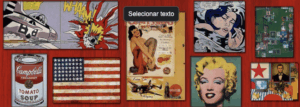
Recognizable Imagery: Campbell’s Soup cans, Coca-Cola bottles, Marilyn Monroe, Mickey Mouse.
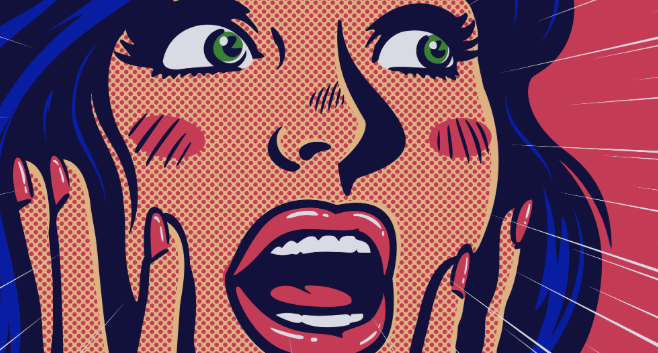
Bright, Flat Colors: They used the primary colors (Red, Yellow, Blue) of comic strips and advertising. No subtle blending.
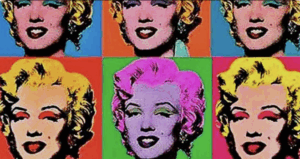
Mass Production Techniques: They rejected the “unique brushstroke.” They used Silkscreen Printing (Serigraphy) to create multiples of the same image, mimicking a factory assembly line.
Irony and Detachment: When you look at a Pop painting, you don’t know if the artist loves the product or hates it. The emotion is removed.
4. The Key Artists (The Giants)
A. Andy Warhol (The King)
The most famous artist of the 20th century after Picasso. He turned himself into a brand.
The Philosophy: He called his studio “The Factory.” He hired assistants to make his art for him. He famously said, “Making money is art and working is art and good business is the best art.”
Key Works:
Campbell’s Soup Cans: 32 canvases, one for each flavor. It elevated a 29-cent product to high art.
Marilyn Diptych: A grid of Marilyn Monroe’s face. Half are brightly colored, half are fading black and white—representing her celebrity vs. her tragic death.
B. Roy Lichtenstein (The Comic Book Artist)
He took single panels from cheap romance and war comic books and painted them on a massive scale.
The Technique: He manually painted the Ben-Day Dots (the tiny dots used in cheap newspaper printing to create color) to make the painting look machine-made.
Key Works: Whaam! (a fighter jet blowing up another plane) and Drowning Girl (“I don’t care! I’d rather sink than call Brad for help!”).
C. Claes Oldenburg (The Sculptor)
While others painted, Oldenburg made sculptures of everyday objects, but with a twist.
The Twist: He played with texture and scale. He made giant hamburgers out of soft fabric that collapsed on the floor (Soft Sculptures) or massive steel clothespins and spoons that towered over city parks.
D. Jasper Johns & Robert Rauschenberg (The Bridge)
These two (often called Neo-Dada) came before Warhol. They reintroduced “objects” into art.
Johns: Painted flags and targets.
Rauschenberg: Created “Combines”—paintings with trash, stuffed animals, and pillows glued to them.
5. The Controversy: “Is this a joke?”
Critics were furious.
The Complaint: They argued that Pop Art was vulgar, unoriginal, and a celebration of capitalism. They felt that copying a soup can label showed zero technical skill.
The Defense: Pop Art held a mirror up to society. If you thought the art was shallow, it was because society had become shallow. It forced people to look at the objects they bought every day and ask why they desired them.
6. Summary Comparison: Abstract Expressionism vs. Pop Art
Feature Abstract Expressionism (1950s) Pop Art (1960s)
Subject The Soul, Emotion, God Supermarkets, TV, Stars
Style Abstract, Messy, Chaotic Realistic, Clean, Hard-edged
Technique Action Painting (Splatter) Silkscreen / Ben-Day Dots
Vibe Serious, Tragic, elitist Cool, Ironic, Popular
Example Jackson Pollock Andy Warhol
7. Legacy: The Business of Art
Pop Art changed the art market forever.
Art as Commodity: Before Warhol, artists were seen as suffering geniuses. After Warhol, artists could be business moguls and celebrities.
Contemporary Heirs:
Jeff Koons: Famous for his giant shiny “Balloon Dog” sculptures. He is the direct heir to Pop Art’s obsession with kitsch and commerce.
Takashi Murakami: The Japanese “Warhol,” mixing anime culture with high art (Superflat).
Banksy: Uses the graphic, stencil style of Pop Art to deliver political messages in the street.
Next Step: Given your interest in SEO and Art Marketplaces, Pop Art is the most crucial movement to understand because it invented the modern “hype” model of selling art.
Would you like to explore Street Art / Graffiti next? It is the modern evolution of Pop Art—taking the “popular” imagery out of the gallery and putting it directly on the street for the public.
Route
Art Galerie Marketplace
Avenida Raja Gabaglia, 2000 - Sala 930 - Torre 01 - Estoril
Belo Horizonte, Minas Gerais 30.494-170 Brazil
Secondary phone: +55 31 99506-1099
Email: service@artgalerie.com.br
URL: https://artgalerie.com.br/
| Monday | Open 24 hours |
| Tuesday | Open 24 hours |
| Wednesday | Open 24 hours Open now |
| Thursday | Open 24 hours |
| Friday | Open 24 hours |
| Saturday | Open 24 hours |
| Sunday | Open 24 hours |