Net Art (also known as Internet Art) is a form of digital artwork distributed via the Internet.
This is the critical distinction: It is not merely “art digitized and uploaded to a website” (like a JPEG of a Monet painting). In Net Art, the Internet itself is the medium. The artwork relies on the specific structures of the web—hyperlinks, browser frames, HTML code, server interaction, and social networking—to exist. If you print it out, the art ceases to function.
Here is a minute, detailed breakdown of the ecosystem of Net Art.
1. The Core Philosophy: “The Browser is the Canvas”
Net Art is site-specific to the computer screen. It explores the relationship between the User (viewer), the Interface (screen/mouse), and the Network (the connection).
Immateriality: Net Art has no physical weight. It is data. It challenges the traditional art market because it is difficult to own, sell, or display in a gallery.
Interactivity: Unlike a painting that you look at, Net Art is something you look through or interact with. The viewer often has to click, scroll, or type to activate the work.
Bypassing Gatekeepers: In its early days, Net Art was a political statement. Artists could distribute their work globally to millions without needing a gallery curator to approve it.
2. The Golden Age: “net.art” (1994–1999)
The period of the 1990s is often referred to specifically as net.art (lowercase, usually with the dot). This was the “Heroic Period” of the medium.
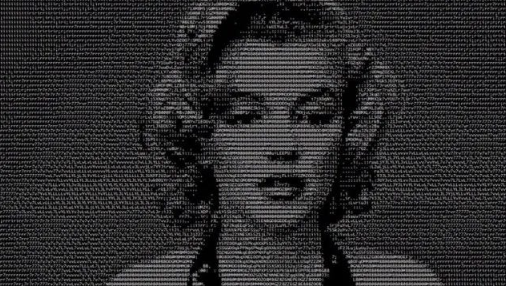
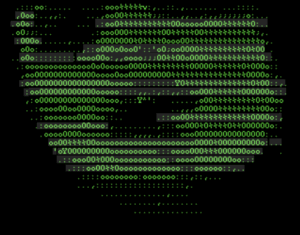
The Aesthetics: Low-bandwidth. Because internet speeds were slow (dial-up), artists couldn’t use video. They used ASCII text, blinking GIFs, bright neon background colors, and raw HTML frames.
The “JODI” Effect: The duo Jodi.org (Joan Heemskerk and Dirk Paesmans) are the pioneers. They created websites that looked like the computer had crashed. They exposed the raw code, creating chaotic, glitchy visuals that forced the viewer to question the stability of the machine.
Key Artists:
Olia Lialina: Created My Boyfriend Came Back from the War (1996), a non-linear narrative told through browser frames and hyperlinks.
Vuk Ćosić: Known for converting classic films (like Deep Throat) into moving ASCII text code.
Alexei Shulgin: Created Form Art, using standard HTML buttons and checkboxes to create visual compositions rather than functional forms.
3. Technologies and Mediums
Net Art evolves alongside the technology of the browser.
A. The Hyperlink
The ability to jump from one place to another. Artists used this to create Non-Linear Narratives where the viewer chooses the path of the story.
B. The Pop-Up Window
In the late 90s, artists utilized the ability to spawn new browser windows.
The Intrusive Art: Some works would spawn endless cascading windows that covered the screen, forcing the user to physically fight the artwork to close it.
C. Flash Art (The Animation Era)
In the 2000s, Macromedia Flash allowed for vector animation, sound, and complex gaming interactions.
Homestar Runner | Albino Blacksheep: While often seen as “cartoons,” these were early forms of interactive net entertainment.
The Obsolescence Crisis: When Adobe killed Flash in 2020, decades of Net Art history were instantly wiped out and became unviewable, requiring emulators (like Ruffle) to save them.
D. Glitch Art
The practice of intentionally corrupting the data of a digital file to create aesthetic errors. Net artists would open an image file in a text editor, delete lines of code, and save it, resulting in colorful, jagged visual corruption.
4. Post-Internet Art (2010s–Present)
As the internet became ubiquitous (smartphones, social media), the distinction between “online” and “offline” disappeared. Post-Internet Art is art that creates objects for the physical world, but with an aesthetic derived from the internet.
Characteristics: The use of stock photography watermarks, heavy branding, “vaporwave” aesthetics, and selfie culture.
Ryan Trecartin: Creates chaotic, high-speed video installations that mimic the attention deficit and identity shifting of internet forum culture.
Surf Clubs: Invite-only blogs (like Nasty Nets) where artists rapidly remixed and reposted found images from the web, treating the internet as a “found object” (readymade).
5. Preservation: How do you collect it?
Net Art poses a massive problem for museums. How do you preserve a website built for Netscape Navigator 4.0 in 1996?
Link Rot: Websites go down. Domains expire. The art disappears.
Rhizome: An organization affiliated with the New Museum (NYC) dedicated to preserving Net Art. They developed WebRecorder, a tool that archives the interaction of a website, not just the screenshots.
Selling Domains: Artist Rafaël Rozendaal invented the “Art Website Sales Contract.” He sells the domain name (e.g., muchbetterthanthis.com) to a collector. The collector owns the domain, but the contract stipulates the site must remain public for everyone to see.
6. The Web3 Evolution (NFTs)
We previously discussed NFTs, but in the context of Net Art, NFTs solved the monetization problem. Before 2021, Net Artists largely worked for free or clout. The blockchain allowed them to finally sell the “ownership” of the browser experience.
Medium Tape, Projector, Screen Code, Browser, Server
Linearity Usually linear (Start to End) Non-linear (Hyperlinked)
Distribution Gallery | Limited Edition Global | URL Access
Viewer Role Passive Watcher Active User (Clicking | Scrolling)
Stability Fixed Format Unstable (Updates/Browsers change)
Route
Art Galerie Marketplace
Avenida Raja Gabaglia, 2000 - Sala 930 - Torre 01 - Estoril
Belo Horizonte, Minas Gerais 30.494-170 Brazil
Secondary phone: +55 31 99506-1099
Email: service@artgalerie.com.br
URL: https://artgalerie.com.br/
| Monday | Open 24 hours Open now |
| Tuesday | Open 24 hours |
| Wednesday | Open 24 hours |
| Thursday | Open 24 hours |
| Friday | Open 24 hours |
| Saturday | Open 24 hours |
| Sunday | Open 24 hours |