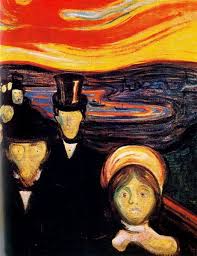
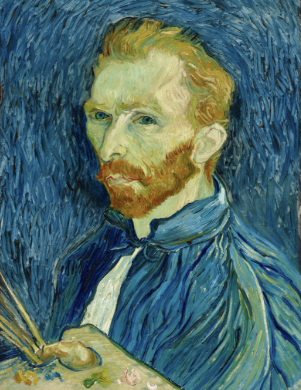
Main Focus: Subjective Emotion and Inner Experience Aesthetic: Distortion of Form and Intense, Unnatural Color Technique: Forceful, Energetic Brushwork
Themes: Anxiety, Urban Life, and Psychological Turmoil
Overview: What is Expressionism?
Expressionism emerged primarily in Germany during the early 20th century as a direct challenge to the pleasant, detached aesthetics of Impressionism. The movement’s primary goal was not to reproduce external reality but to express the artist’s inner emotional state and subjective feelings. This often resulted in a powerful, sometimes jarring, visual style.
The style is defined by distortion, intense, unnatural colors, and forceful brushwork. Expressionists deliberately manipulated form and color to evoke mood, anxiety, passion, and psychological turmoil. Figures and landscapes are often rendered in angular, rough forms, reflecting the tumultuous times and the artist’s turbulent relationship with modernity. Key groups like Die Brücke (The Bridge) and Der Blaue Reiter (The Blue Rider) helped define this era of intense feeling.
Curatorial Note: Depth of Subjective Feeling
This curated collection features works that demonstrate the raw power and psychological depth of Expressionism. We focus on pieces that showcase the movement’s hallmark characteristics: vivid, non-naturalistic color palettes and the emotional distortion of form. These artists sought to provoke, stir, and reveal the truth of inner life.
Our collection is a study in emotional intensity. It brings together masters who used art as a vehicle for personal confession and social commentary. Acquiring a work from this collection means investing in a piece of art history that values genuine feeling and psychological insight above all else.